Key Takeaways
- This guide includes an interactive questionnaire to help you explore teeth-straightening options that may be suitable for you.
- Traditional braces are not the only option for improving tooth alignment or appearance.
- Clear aligners offer a discreet and removable option for many alignment problems.
- Cosmetic treatments such as veneers and bonding can improve minor irregularities without moving teeth.
- A dental assessment helps determine the safest and most suitable treatment option.
Traditional fixed braces are not the only way to improve the appearance or alignment of your teeth. Depending on your dental needs, there are several alternatives that can be considered, including clear aligners, orthodontic appliances and cosmetic dental treatments. Some options can physically change the position of your teeth or jaw, while others can change the appearance of your teeth without moving them.
The most suitable option depends on several factors, including the severity of your misalignment, your age, oral health, treatment goals and budget. A dental assessment can help determine which treatment options are most appropriate.
7 Ways To Straighten Teeth Without Traditional Braces
If you want to improve your smile without conventional fixed braces, here are some of the options you may want to consider.
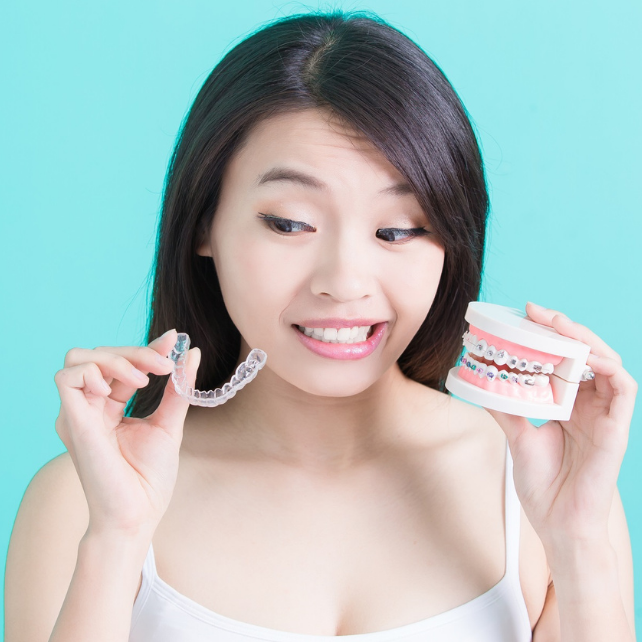
Clear aligners use a series of custom-made, transparent trays to gradually move your teeth into their planned positions. They are a discreet alternative to fixed braces and can be removed for eating, brushing and flossing, making daily oral hygiene more convenient.
That said, clear aligners need to be worn consistently as directed to achieve the planned tooth movements. They may also not be suitable for every type of orthodontic problem. A dentist should assess your teeth and bite first to determine whether clear aligners are suitable for you.
Retainers are mainly used to keep teeth in their corrected positions after orthodontic treatment and help prevent them from shifting back over time. In selected cases, certain retainers may also make very minor tooth movements.
However, retainers are not designed to replace comprehensive orthodontic treatment. If you have significant crowding, spacing or bite problems, braces or clear aligners may be more appropriate.
Veneers do not physically straighten teeth. Instead, they can make slightly crooked, uneven or irregular teeth appear straighter by changing their shape and appearance. Porcelain or composite veneers are bonded to the front surface of the teeth and can also address concerns such as small gaps, uneven tooth shapes or discolouration.
Since veneers only change how your teeth look, they do not correct the underlying tooth position or bite. Tooth preparation may also be needed, so veneers are a more permanent cosmetic option that should be considered carefully.
Small irregularities do not always require tooth movement. Teeth reshaping involves removing small amounts of tooth enamel to alter the shape of a tooth. It may be considered for minor cosmetic concerns such as slightly uneven edges, small overlaps or differences in tooth shape.
The procedure can create a more even and balanced appearance without orthodontic treatment.
Dental bonding, which can be commonly confused with veneers, uses a tooth-coloured composite resin to build up and reshape teeth. The material is applied to the tooth surface and carefully shaped to improve its appearance, making it a minimally invasive option for certain minor cosmetic concerns.
Bonding may be suitable for small gaps, uneven edges, chipped teeth or minor differences in tooth shape. It may also need to be repaired or replaced over time as the bonding material can wear or chip.
For growing children and adolescents, creating more room for the teeth may sometimes involve widening the upper jaw rather than moving the teeth alone. Palatal expanders are orthodontic appliances that gradually increase the width of the upper jaw to create more space for developing teeth.
This approach may be recommended for a narrow upper jaw, crowding or certain types of crossbite. Further treatment with braces or clear aligners may still be needed afterwards to align the teeth.
Some alignment problems originate from how the upper and lower jaws relate to each other. In growing children and adolescents, functional orthodontic appliances can be used to influence jaw development and address certain bite concerns.
The Herbst appliance is one example. It helps guide the lower jaw into a more forward position and may be used for certain types of overbite or jaw discrepancies. Functional appliances do not necessarily replace braces or aligners, and some patients may require further orthodontic treatment afterwards to fine-tune the position of their teeth.
Which Teeth Straightening Option Is Right for You?
Use the questionnaire below to see which treatment options may be worth considering based on your concerns.
Why Are Your Teeth Not Straight?
Teeth can become crooked or uneven for several reasons. Crowding can occur when there is not enough space for all the teeth to fit properly, while spacing can leave noticeable gaps between teeth. Bite problems, jaw development and childhood habits such as prolonged thumb sucking can also affect how the teeth develop and align.
Some alignment concerns are mainly cosmetic, while others can affect how you chew, clean your teeth or how your upper and lower teeth meet. As such, identifying the underlying cause is important because different problems may require different treatments.
Benefits of Straightening Your Teeth Without Braces
Multiple alternatives are available to straighten your teeth without braces. Depending on your needs, these treatments can offer various benefits, including greater discretion, convenience and targeted cosmetic improvements.
- More discreet treatment: Clear aligners are transparent and less noticeable than traditional braces, making them an appealing option if you prefer a more subtle way to straighten your teeth.
- Greater comfort and convenience: Clear aligners can be removed when brushing and flossing, and can even be cleaned, which may make daily routines easier compared with fixed braces.
- Targeted cosmetic improvements: Not every smile concern requires orthodontic treatment. Dental bonding can improve the appearance of chipped teeth, uneven edges or small gaps by changing the shape of the teeth without moving them.
- Fewer visible changes to your smile: Options such as dental bonding and veneers can improve the appearance of certain teeth without the brackets and wires associated with traditional braces.
FAQs About Straightening Teeth Without Braces
The cheapest option depends on the extent of your misalignment and whether you want to physically move your teeth or simply improve their appearance. For minor cosmetic concerns, dental bonding is typically one of the more affordable options.
If you want to straighten your teeth, clear aligner costs vary depending on the brand and complexity of treatment.
No, you should not try to move your teeth at home using DIY methods or social media hacks. Using rubber bands, string, paper clips, DIY braces or other household objects can damage your teeth and gums and may cause permanent problems with your bite.
If you are concerned about crooked teeth, speak to a dentist. They can assess the cause of the misalignment and recommend an appropriate treatment option.
There is no single way to straighten teeth quickly, as treatment time depends on the severity of the misalignment and the type of treatment used. Clear aligners can be used to treat mild to complex alignment concerns, while minor cosmetic concerns may be improved more quickly with treatments such as dental bonding.
However, faster treatment is not always better. A dentist should assess your teeth and bite to determine the safest and most suitable option for you.
Yes. There is no fixed age limit for teeth straightening, and adults can also undergo orthodontic treatment. However, the most suitable treatment will depend on factors such as your teeth, gums, jaw development and overall oral health.
No, veneers cannot correct an overbite because they change the appearance of your teeth rather than repositioning the teeth or jaw. They may make individual teeth look more even or aligned, but they do not address the underlying bite problem.
No. Mouthguards are designed to protect your teeth, not move or straighten them. They are only used to protect against grinding and clenching or to reduce the risk of dental injuries during sports.