Metal braces are a type of traditional braces used to improve teeth alignment and bite concerns over time. They consist of small metal brackets bonded to the front surface of the teeth, connected by a thin orthodontic wire and small elastic modules that help hold the wire in place.
This orthodontic treatment is commonly used to manage concerns such as crowded teeth, gaps between teeth and bite misalignment.
Brackets, orthodontic wires, and elastic modules work together to guide tooth movement. The wire runs through each bracket and applies controlled pressure to gradually reposition the teeth according to the treatment plan.
During follow-up appointments, adjustments may be made to the wire and elastic modules to support continued tooth movement. These adjustments are carried out progressively so your teeth and surrounding structures can adapt throughout treatment.
In Singapore, traditional metal braces typically cost between $3,500 and $6,000. The overall cost may vary depending on factors such as the complexity of the case, treatment duration, and the dentist’s experience.
At i.Dental, traditional metal braces start from $3,815* (inclusive of 9% GST). An initial consultation package fee of $239.80, inclusive of 9% GST, applies, which includes a comprehensive assessment and diagnostic records to evaluate your teeth and bite condition.
The consultation package includes:
*Eligibility requirements:
Our NSF and Student Braces Plan is priced at $3,815 (inclusive of 9% GST). This package is designed to help make braces treatment more accessible for students and national servicemen in Singapore.
The plan includes:
Eligibility requirements:
A Students and NSFs plan is also available for self-ligating braces. Please contact us for more details.
Metal braces may be recommended for a wide range of orthodontic concerns. To find out whether they are suitable for your case, schedule a consultation with our clinic.

Gaps between teeth (diastema) refer to extra spaces between two or more teeth. These spaces may affect the appearance of your smile and make it easier for food to get trapped between teeth.
Crowding occurs when there is not enough space for teeth to sit neatly in the jaw. As a result, some teeth may overlap, rotate or appear crooked.

A crossbite occurs when some upper teeth sit behind the lower teeth. Over time, this may contribute to uneven wear or affect how the teeth bite together.

An open bite occurs when the upper and lower teeth do not meet fully when the mouth is closed. This may leave a visible gap between the teeth and affect biting or speech in some cases.

With an overbite, the upper front teeth overlap the lower front teeth vertically. Depending on its severity, this may affect how the upper and lower teeth meet when biting.

An underbite is when your lower jaw extends horizontally beyond your upper jaw. This may affect biting, chewing or how the upper and lower teeth come together.

Compared to other orthodontic options such as ceramic braces or clear aligners, traditional metal braces are generally more cost-effective. This makes them a practical option for those seeking an affordable fixed braces treatment.
Made with stainless steel brackets and wires, traditional braces are designed to withstand daily wear throughout treatment. Their durability makes them suitable for managing a wide range of teeth alignment and bite concerns over time.
Commonly used to manage malocclusions, traditional braces can support the treatment of different teeth and bite alignment concerns. Their fixed design allows for gradual and controlled tooth movement throughout orthodontic treatment.
Metal braces are one of several teeth straightening options available at i.Dental. The most suitable option depends on your teeth condition, lifestyle, budget and preferences.
Below is a comparison of metal braces against other common orthodontic options.

Both metal and ceramic braces are fixed braces that use brackets and wires to guide teeth into alignment. However, they differ in areas such as appearance, durability, comfort, and cost.
Metal braces use stainless steel brackets and are generally more durable and cost-efficient. Ceramic braces use tooth-coloured or clear brackets that blend in more naturally with the teeth, making them a less noticeable option. However, ceramic braces may be slightly less durable and are typically more costly due to the materials used.

Unlike metal braces, Invisalign uses a series of clear aligners planned according to your teeth alignment needs. This makes Invisalign a more discreet option for individuals who prefer a less noticeable treatment experience.
When comparing Invisalign vs braces, factors such as treatment complexity, lifestyle habits, oral hygiene routines, and treatment preferences are commonly considered.

Traditional metal braces typically use elastic modules to secure the wire to the brackets. Self-ligating braces, on the other hand, use brackets with a built-in mechanism to hold the wire in place without elastic modules.
Since 1989, i.Dental has provided dental care for patients across Singapore. Our dentists will guide you through each stage of your metal braces treatment, from the initial assessment to follow-up care and retainers.
i.Dental has clinics located in Tanjong Pagar, Yishun and Ubi, making it easier to attend your consultation and follow-up appointments. Regular visits also support progress checks and adjustments throughout your metal braces treatment.
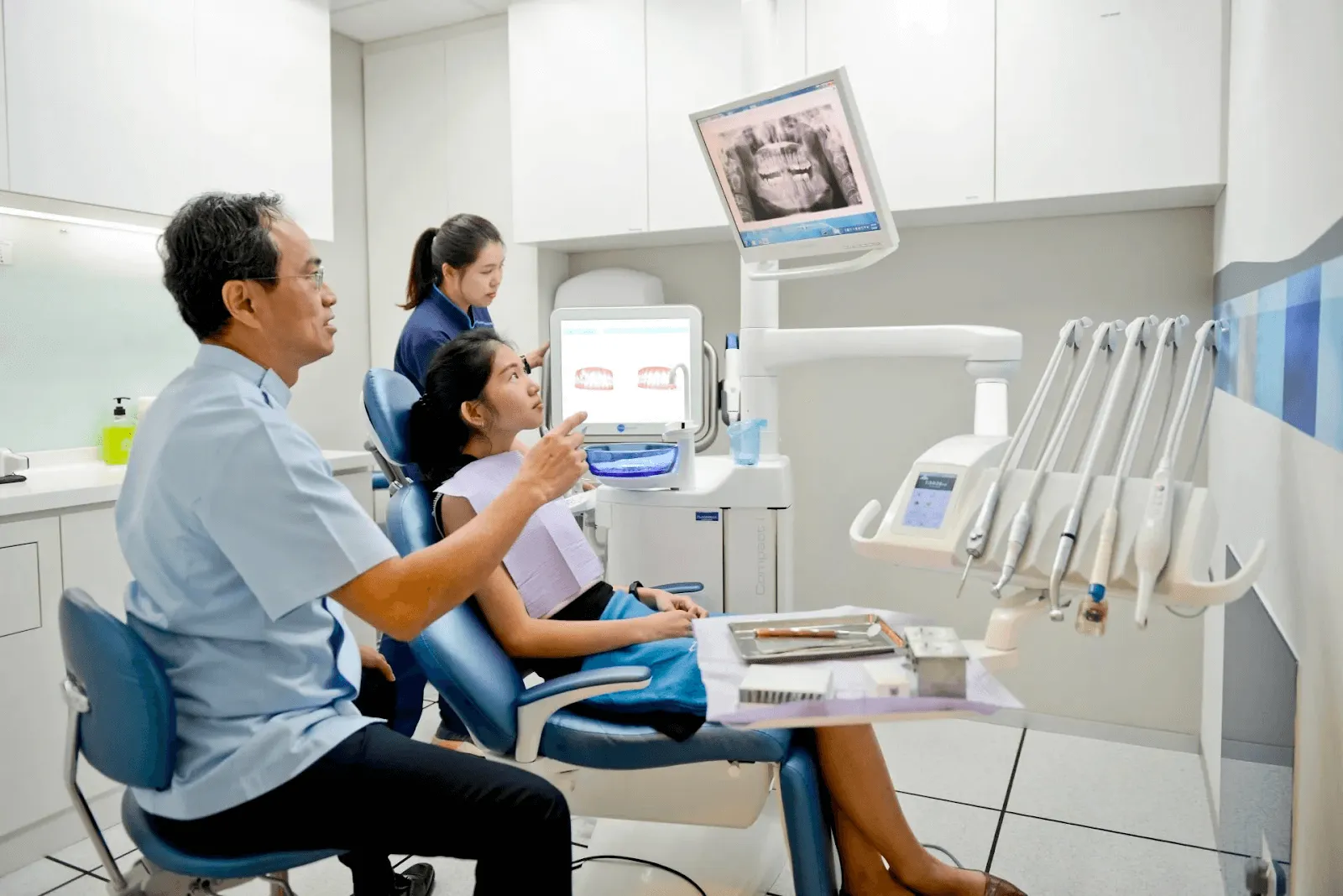
Metal braces may be suitable for individuals with teeth alignment or bite concerns, including crooked teeth, crowded teeth, gaps between teeth, or bite misalignment. They are commonly used for mild to more complex orthodontic cases that require gradual and controlled tooth movement over time.
Metal braces are generally more cost-effective than ceramic braces at i.Dental. However, the overall treatment cost may vary depending on factors such as case complexity and treatment duration.
Yes, adults can consider metal braces if their teeth and gums are healthy enough for orthodontic treatment. Metal braces can be used at different life stages to address teeth alignment or bite concerns.
There is no single ideal age for metal braces, as treatment recommendations vary based on an individual’s teeth development, bite condition, and alignment concerns. While braces are commonly started during the teenage years when most permanent teeth have erupted, adults may also benefit from orthodontic treatment.
For younger patients, early assessment can help determine whether braces for kids may be suitable and when treatment should begin.
Metal braces treatment usually takes around 12 to 24 months. The exact duration depends on case complexity, the amount of tooth movement needed and how your teeth respond during treatment.
Yes, some metal braces use coloured elastic modules, which can be changed during adjustment visits. This allows you to choose different braces colours throughout your treatment.
Good oral hygiene is important during metal braces treatment, as brackets and wires can trap food more easily. Patients are generally advised to brush thoroughly after meals, clean carefully around the brackets and gumline, and use tools such as interdental brushes or floss threaders where needed.
With metal braces, it is best to avoid hard, sticky or chewy foods that may loosen brackets or bend the wire. Softer foods are usually easier to manage after adjustment visits, so keeping a list of soft foods for braces can make meals easier during treatment.
Yes, retainers are usually needed after metal braces to help maintain your teeth's position. They help reduce the chances of teeth shifting after braces treatment.
No, MediSave generally does not cover braces treatment when it is performed for orthodontic or cosmetic purposes.



"*" indicates required fields